
1943 & 1944 Steel Penny Errors
One of the rarest and most famous U.S. coin errors of the 20th century was brought into Pawn Stars — and the value shocked everyone watching. These coins are so rare that collectors have spent decades searching through mountains of pocket change just hoping to find one.
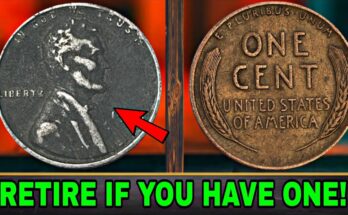
We’re talking about the legendary 1943 copper penny and the 1944 steel penny — coins that were never supposed to exist.
If you ever find one of these, you’re not holding pocket change — you’re holding a gold mine 💎
Let’s break this down step by step.
🧲 The 1943 & 1944 Penny Error Explained (Why These Coins Exist)
During World War II, copper was desperately needed for ammunition and military equipment. To save resources:
- 1943 pennies were supposed to be struck in steel
- 1944 pennies were supposed to return to copper
However, a few leftover metal planchets from the previous year accidentally made it into production.
That mistake created:
- 🔴 1943 copper pennies
- ⚪ 1944 steel pennies
These are known as off-metal strike errors, and they are among the most famous mint mistakes in U.S. history.
🏛️ How Rare Are These Coins?
This is where it gets truly unbelievable.
- Over 2 billion pennies were struck in 1943 and 1944
- Across Philadelphia, Denver, and San Francisco mints
- The total known population of these off-metal errors is estimated at around 60 coins
- Some experts believe fewer than 30 examples of certain varieties still exist today
That means:
📉 30 coins out of billions
This is why collectors have searched endlessly for them — and why prices keep climbing.
🎥 Pawn Stars Moment: A Shockingly Low Estimate?
When one of these coins appeared on Pawn Stars, the expert estimated the value at around $30,000.
That raised eyebrows.
Why?
Because while $30,000 is already impressive, auction records tell a much bigger story.
The expert even explained:
- These coins are best valued at public auctions
- That’s where every major collector in the world competes
- Auctions set the real market price, not private offers
And when these coins hit major auctions, prices often go much higher.
📈 Real Auction Proof: 1944 Steel Penny Sale
To put things into perspective:
🪙 A 1944 steel penny sold at auction in June
💰 The final price aligned with — and in some cases exceeded — the $30,000 estimate
📊 Higher-grade examples have sold for much more
This confirms that:
- These values are real
- Demand is global
- Prices are driven by collector competition
🔍 How to Identify a Real 1943 or 1944 Steel Penny
Before getting excited, here’s what to check:
✅ Magnet Test
- Steel pennies stick to a magnet
- Copper pennies do not
✅ Date Matters
- 1943 + copper color = extremely rare
- 1944 + steel color = extremely rare
✅ Mint Marks
These errors were struck at:
- Philadelphia (no mint mark)
- Denver (D)
- San Francisco (S)
Each mint variety has its own rarity level.
⚠️ Never clean the coin. Cleaning can destroy value instantly.
💡 Why Collectors Pay So Much
These pennies combine:
- ✔ Extreme rarity
- ✔ World War II history
- ✔ Famous mint errors
- ✔ Strong auction demand
- ✔ Global collector interest
That’s why they are considered crown-jewel errors of American numismatics.
🧠 Final Thoughts: Check Your Pennies Carefully
Most people ignore old pennies.
Collectors don’t.
If you ever come across a 1943 or 1944 penny, take a closer look. One small difference in metal could mean the difference between one cent and $30,000+ 💰
These coins prove that history, mistakes, and scarcity create real wealth.
Leave a Reply