
1943-D Steel Penny Sells
🪙 A Scratched Penny That Shocked Collectors
At first glance, this coin looks completely ordinary.
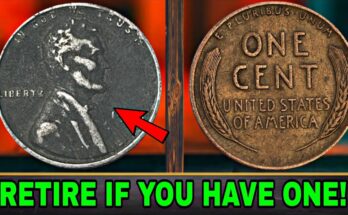
It’s a 1943-D steel penny, heavily scratched, circulated, and far from beautiful. No shine. No eye appeal. Nothing that screams “rare.”
Yet on December 22, 2025, this exact coin sold for $7,800 at auction 🤯 — fully certified and guaranteed.
So the big question is…
👉 HOW did this happen?
Let’s break it down step by step.
🔍 Step 1: Why 1943 Steel Pennies Are Usually Common
In 1943, copper was needed for World War II.
To conserve copper, the U.S. Mint struck pennies in zinc-coated steel instead.
- Millions were produced
- Most are worth $0.25 to $5 today
- Even circulated examples are easy to find
So why did this one sell for thousands?
⚠️ Step 2: The Shocking Discovery — Wrong Planchet Error
This penny was not struck on a U.S. steel blank.
Instead, it was accidentally struck on an Australian Sixpence planchet 🇦🇺
Yes — a foreign coin blank.
That makes this a wrong planchet error, one of the most desirable error types in numismatics.
⚖️ Step 3: The Tiny Weight Difference That Changed Everything
Here’s what made the coin so hard to detect:
- Normal 1943 steel penny: 2.7 grams
- This error coin: 2.8 grams
That’s only 0.1 grams difference ⚠️
Almost impossible to detect without professional equipment.
This is why so many error coins are overlooked.
👀 Step 4: Visual Clues (Almost Invisible)
Even experienced collectors admitted this one was tough.
Possible indicators included:
- Very subtle surface irregularities
- Faint markings inconsistent with U.S. steel cents
- Slight planchet thickness variation
But honestly?
➡️ Nothing obvious to the naked eye
This coin was only confirmed after professional certification.
🏛️ Step 5: Certification Made It Legitimate
Once authenticated by a major grading service:
- The error was guaranteed
- The origin was confirmed
- Buyer confidence skyrocketed 📈
Despite poor condition and scratches, the coin sold immediately.
💵 Final price: $7,800
🧠 Step 6: The Biggest Lesson for Collectors
This sale proves something very important:
❌ Condition is NOT everything
✅ Errors + certification = value
Even ugly coins can be valuable if:
- The planchet is wrong
- The weight is unusual
- The strike doesn’t match expectations
🔎 Step 7: What YOU Should Do
Before you dismiss any coin:
1️⃣ Weigh it carefully
2️⃣ Look for unusual color or thickness
3️⃣ Check mint marks and dates
4️⃣ Never assume “it’s too common”
5️⃣ When in doubt — get it certified
Thousands of dollars are missed every year because people don’t look closely enough.
🏁 Final Thoughts: Don’t Ignore the “Ugly” Coins
This scratched 1943-D penny proves that:
🪙 Even damaged coins can be treasures
⚠️ Small details matter
💰 Errors can outweigh condition
Always examine your coins carefully — because the next $7,800 discovery might already be in your collection.
Leave a Reply