💎 Introduction: Million-Dollar Penny — Fact or Fiction?
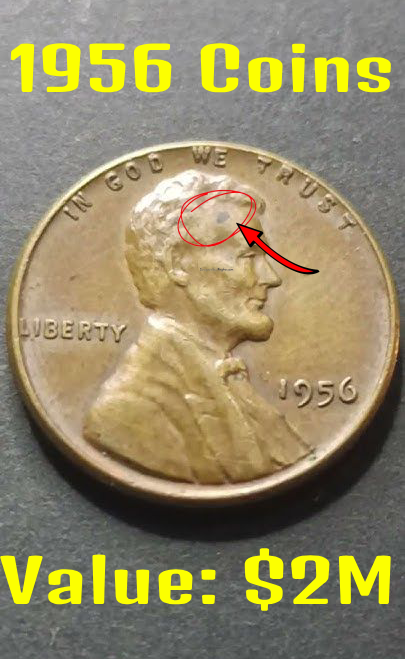
Can a 1956 Lincoln penny really be worth $2,000,000?
You may have seen viral posts claiming a rare mint error turned an ordinary cent into a multimillion-dollar treasure. 🤯
The truth is more nuanced — and far more interesting.
While no confirmed $2 million 1956 penny has ever been publicly sold, certain theoretical mint errors and extreme condition rarities explain where this number comes from and what your coin might actually be worth.
Let’s break it down step by step, separating real numismatic facts from internet hype. 👇
🧠 Step 1: Why the “$2,000,000” Price Exists at All
The multimillion-dollar figure is theoretical, based on how collectors value:
- Ultra-rare wrong-planchet errors
- Coins with only 1–2 known examples
- High-grade coins from major error categories
- Historical auction behavior of similar coins
💡 In other words:
The number represents what collectors might pay if a previously unknown, spectacular 1956 error surfaced — not a routinely traded coin.
🔬 Step 2: The Rare Error That Sparks the Myth
The error most often associated with the $2M claim is:
⚠️ Lincoln Cent Struck on the Wrong Planchet (Theoretical)
This would mean:
- A 1956 Lincoln cent design
- Accidentally struck on a smaller planchet intended for another denomination
- Showing wrong weight, size, and edge characteristics
🔍 Why this matters:
- Authentic wrong-planchet errors are among the rarest U.S. Mint mistakes
- Some have sold for six or seven figures when confirmed and unique
⚠️ Important clarification:
As of now, no publicly verified 1956 Lincoln cent error has sold anywhere near $2,000,000. Claims suggesting otherwise are speculative or misleading.
🧪 Step 3: How to Check a 1956 Penny for Legit Errors
If you own a 1956 penny, here’s what you can realistically look for:
✅ Quick Physical Checks
⚖️ Weight:
- Normal bronze cent ≈ 3.11 grams
- Anything significantly different deserves expert review
📏 Diameter:
- Standard cent ≈ 19.05 mm
🔍 Edge:
- Genuine cents have smooth edges
- Reeded edges are not normal for pennies and require authentication
🪙 Strike Quality:
- Weak details
- Off-center designs
- Missing design elements
💡 These do not guarantee extreme value — but they justify professional evaluation.
📊 Step 4: Realistic 1956 Penny Value Guide (2025)
| Type | Estimated Value |
|---|---|
| Circulated (common) | $0.03 – $0.25 |
| Uncirculated (MS60–63) | $2 – $10 |
| Gem Uncirculated (MS65+) | $30 – $150 |
| Major Mint Error (verified) | $5,000 – $100,000+ |
| Hypothetical unique error | 💎 Up to seven figures (theoretical) |
⚠️ The $2,000,000 figure applies only to a one-of-a-kind, museum-level discovery — not normal finds.
🚫 Step 5: Beware of Viral Misinformation
Many online posts exaggerate or fabricate details.
Common Red Flags
❌ Claims of guaranteed million-dollar value
❌ No grading service cited
❌ Altered or shaved coins
❌ No auction record or provenance
✅ Always verify through PCGS or NGC — never rely on social media claims alone.
🏦 Step 6: What to Do If You Think You Found Something Special
If your 1956 penny looks unusual:
1️⃣ Do not clean it
2️⃣ Handle only by the edges
3️⃣ Take clear photos (front, back, edge)
4️⃣ Submit to PCGS or NGC for authentication
5️⃣ Insure the coin before shipping if it appears valuable
Professional grading is the only way a coin can approach high-end value.
🎯 Final Verdict: Jackpot or Pocket Change?
The idea of a $2,000,000 1956 penny is based on collector theory, not a confirmed sale.
However:
- Genuine mint errors do exist
- Rare discoveries still happen
- Extraordinary finds begin with ordinary coins
👉 Checking your change is free — and knowledge is your best tool. 🪙
Leave a Reply