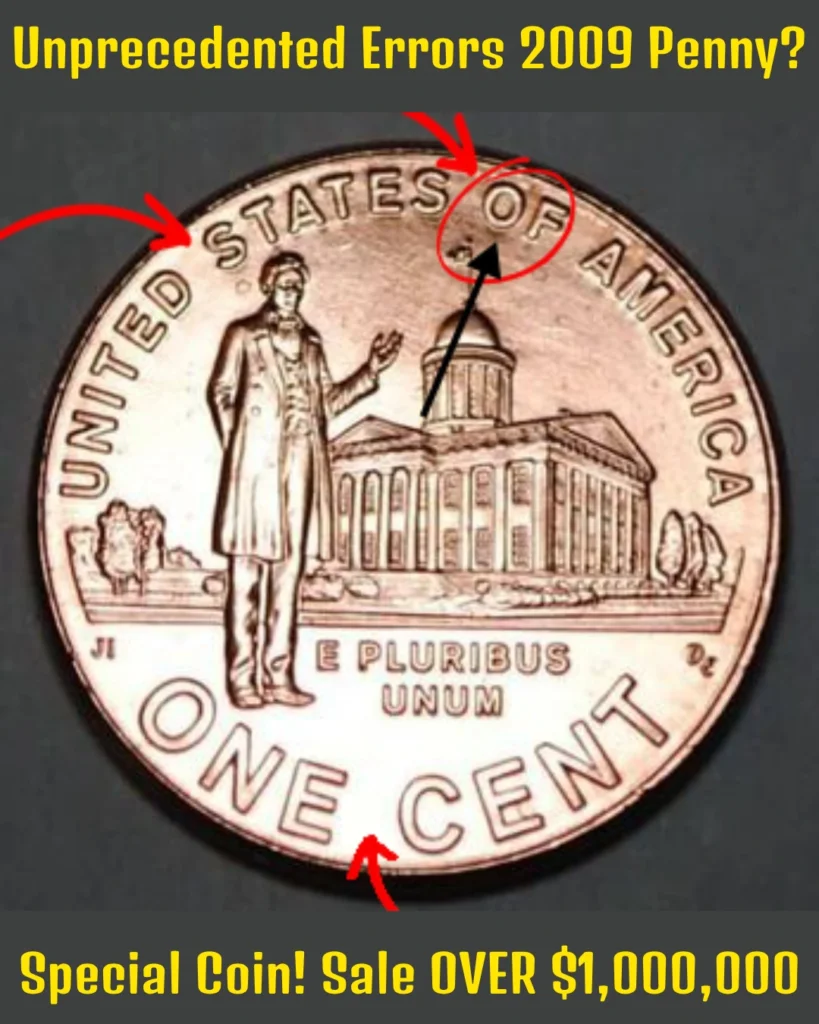
The 2009 Lincoln cent had four different reverse designs (Log Cabin → Formative Years → Professional Life → Presidency), which increased minting complexity — and the chance of unusual errors.
Most 2009 errors are worth $5–$500, but an absolutely unique, gem-condition error (true mule, dramatic die break, or proof-level doubled die) with perfect provenance could draw seven-figure attention in extreme, hypothetical scenarios. This guide shows you, step-by-step, how to spot, document, and protect potentially high-value 2009 penny errors. 🪙🔎
🔍 Why 2009 Pennies Are Worth Checking
- Four reverse designs meant more die changes and more opportunity for mistakes.
- Modern minting is precise, but high volume + many die swaps = higher chance of weird one-offs.
- Most errors sell for modest amounts — but the market does reward truly unique, flawless, documented pieces. (This is an educational look at the extreme end of the market.) 🚨
⚠️ Error Types That Could Attract Big Money (and What to Look For)
Below are the error types collectors take most seriously. For each, I’ll show what to look for, typical value ranges, and why one exceptional example could skyrocket in value.
1) Die Chips & Die Breaks — raised metal bumps or “lumps” 🗣️
What it is: Part of the die fractures; struck coins show raised, blob-like metal where it shouldn’t be.
Where to inspect: Legends (especially “UNITED STATES OF AMERICA”), corners of reverses, near the design devices.
Typical value: $10 → $100+ for small chips; dramatic, documented lumps can be worth much more.
Why big money: A huge, eye-catching die break on a flawless coin with provenance can become a showpiece.
2) Doubled Dies (DDO / DDR) — the classic “shadow” doubling 💥
What it is: The die itself was impressed more than once in slightly different positions — letters or design elements show a second, separated impression.
Where to check: LIBERTY, IN GOD WE TRUST, the 2009 date, and prominent reverse elements.
Typical value: $50 → $500+; major proof-level doubling in uncirculated grade could be worth far more.
Red flag: Machine doubling (shallow, shelf-like) — not the same as true doubled die.
3) Struck-Through / Struck-On Errors — foreign material left on the planchet 💨
What it is: Lint, grease, or foil between die and planchet produces voids or odd impressions.
Typical value: $10 → $200+ depending on how attractive/rare the result looks.
Why big money: Unusual and attractive struck-throughs on a gem coin with strong photos/provenance can command collector interest.
4) Off-Center Strikes & Mules — the unicorns 🌀
What it is: Planchet misaligned (off-center) or struck by mismatched dies (a mule — extremely rare).
Typical value: Off-center values vary widely; true mules in gem grade can be extremely valuable.
Why big money: Mules + perfect grade + documentation = potential for exceptional offers.
⚠️ Reality Check: The $1,000,000+ Claim
- Important: Seven-figure outcomes are theoretical and reserved for extremely unique combinations: a previously unknown mule or transitional error on a perfect MS-67/MS-68 coin with airtight provenance and auction exposure.
- Most errors — even dramatic ones — sell for thousands, not millions. Treat million-dollar headlines as aspirational until proven with certification and auction results. 📉
🔬 Step-by-Step: How to Inspect Your 2009 Pennies (Practical Walkthrough)
Follow this checklist exactly — no fluff.
1️⃣ Gather everything dated 2009
- Pull coins from jars, rolls, wallets, and recent purchases. Separate by reverse design (Log Cabin, Formative Years, Professional Life, Presidency).
2️⃣ Tools you need
- 10×–20× loupe (essential)
- Bright raking LED light (reveals raised die features)
- USB digital microscope or macro camera for photos (optional but highly recommended)
- Soft gloves (avoid fingerprints)
3️⃣ Systematic inspection routine
- Obverse & reverse overview: Scan obverse and the corresponding reverse.
- Legends first: Examine UNITED STATES OF AMERICA, IN GOD WE TRUST, LIBERTY, and the date for doubling or raised lumps.
- Fields & devices: Look for die chips, struck-through material, unusual metal flow or raised lumps.
- Edge & planchet: Note any odd planchet lamination, mismatched metal, or evidence of tampering.
- Photograph: Take full-coin shots + 3–6 macro closeups (head on, 45° raking light, and straight macro).
🧾 Grading & Condition — Why That Little Letter Grade Matters
- Circulated: Most errors add only modest premiums.
- AU / MS (Uncirculated): MS-60 to MS-67 — value increases steeply with grade.
- Gem MS-67+ with unique error and solid provenance: This is the zone where extraordinary offers sometimes appear.
- NEVER clean a coin. Cleaning ruins the surfaces and often destroys value. 🚫
✅ Authentication & Selling Workflow (Do this in this order)
- Don’t touch or clean — handle by the rim with gloves.
- High-res photos — full obverse/reverse + multiple macro shots.
- Cross-reference — compare with PCGS/NGC/ANACS image libraries and reputable error guides.
- Pre-submission questions: Use forum feedback (PCGS forums, CoinTalk, specialist Facebook groups) — but don’t rely solely on opinions.
- Third-party grading & encapsulation (PCGS, NGC, ANACS) — essential for unlocking top auction value.
- Choose selling venue: high-end graded auction houses for big pieces; specialist error dealers or major marketplaces for lower-tier items.
🚩 How to Tell Real Errors from Damage, Repairs, or Fakes
- Die breaks/chips: raised and follow the metal flow — rounded, organic shapes.
- Post-mint damage: recessed or flat gouges, scratches, or pitting (not the same as die break).
- Machine doubling: flat shelving on devices — lacks rounded relief of true doubled dies.
- Tampering signs: filing marks, added bits, plating seams, or glue — avoid. If in doubt, get pro authentication.
📈 Market Notes (2024–2025)
- Demand for unique, certified modern errors is strong; provenance + certification are the biggest value multipliers.
- Sensational headlines sell clicks — but the auction results are the final arbiter of value.
- The best path to maximum price is certified, well-photographed, and advertised at a reputable auction.
🧭 Quick Action Checklist — What You Should Do Right Now
- Grab a loupe and inspect all your 2009 cents (focus on the Professional Life reverse if that’s what caught your eye). 🔎
- Photograph anything suspicious with macro photos. 📸
- Post a non-leading photo (don’t claim “$1M find”) to a reputable forum or send to a pro grader for feedback.
- If the error looks dramatic, consider sending straight to PCGS/NGC/ANACS for authentication (after forum/desk checks). 🛡️
Leave a Reply