At first glance, a 1945 Washington quarter looks like an ordinary silver coin worth only a few dollars. But under the right conditions, one example shocked collectors by selling for an incredible $21,000 at auction.
The difference between a $5 silver coin and a five-figure collector piece comes down to mint mark, condition, and originality. Below is a simple, step-by-step guide to help you determine whether your 1945 quarter could be a hidden fortune.
🧠 Step 1: Why the 1945 Quarter Is So Valuable
Collectors prize the 1945 quarter for several key reasons:
✅ 90% Silver Content – Even worn examples hold intrinsic value
✅ Historic Importance – Struck during the final year of World War II
✅ Extreme Condition Rarity – Very few survive in near-perfect grades
While millions were minted, only a tiny number remain in pristine “Mint State” condition.
💸 Step 2: Record-Breaking Auction Prices
High-grade examples have achieved remarkable prices at major auctions.
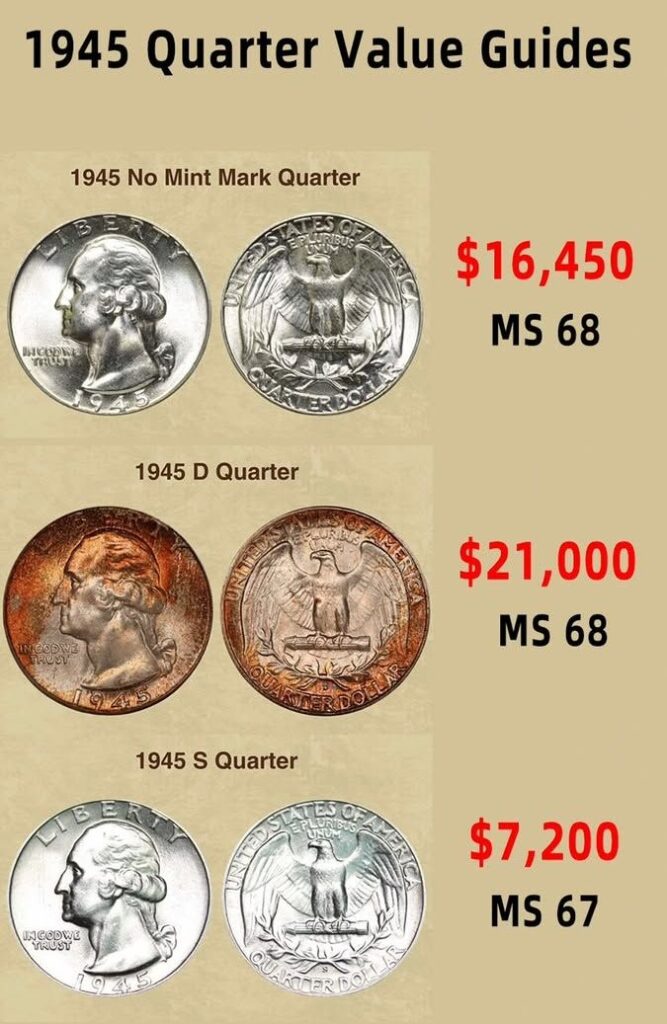
| Mint Mark | Grade | Auction Record |
|---|---|---|
| 🏅 1945-D (Denver) | MS-68 | 💰 $21,000 |
| 🏛️ 1945-P (Philadelphia) | MS-68 | 💰 $16,450 |
| 🌉 1945-S (San Francisco) | MS-67 | 💰 $7,200 |
💡 Even average uncirculated coins can be worth hundreds of dollars, so every detail matters.
⭐ Step 3: What Separates a $6 Coin From a $6,000+ Coin?
🔍 Key Traits of High-Grade (MS-67 / MS-68) Quarters
• Full original cartwheel luster 🌟
• No visible wear on Washington’s hair
• Sharp eagle feathers with no flat spots
• Very few contact marks (only under magnification)
💰 Typical Value Ranges
• Circulated: $4–$6 (silver value)
• Uncirculated: $20–$60
• Gem Uncirculated (MS-65+): $100–$300+
• Top-Tier Gems: Thousands to $21,000
🧾 Step 4: How to Check If Your 1945 Quarter Is Valuable
🪙 Step 4.1: Check the Mint Mark
Flip the coin and look below the wreath on the reverse:
• D = Denver → 💎 Most valuable in top grades
• S = San Francisco
• No mark = Philadelphia
🔦 Step 4.2: Inspect Under Bright Light
Use strong lighting and a magnifier to:
✔ Look for original silver surfaces
✔ Check for full hair and feather detail
✔ Avoid coins that look overly shiny (often cleaned)
🧠 Step 4.3: Compare With Professional Examples
Use PCGS Photograde to compare your coin with verified Mint State examples. This helps you estimate its realistic grade before submitting it.
🧤 Step 5: What to Do If Your Coin Looks Exceptional
If your quarter appears pristine:
1️⃣ Handle only by the edges (cotton gloves recommended)
2️⃣ Place it in a protective holder
3️⃣ Submit to PCGS or NGC for grading
4️⃣ Insure the coin before shipping
🏦 For high-value coins, professional auction houses often bring the strongest prices.
⚠️ Step 6: Beware of Fakes and Altered Coins
High prices attract bad actors. Watch for:
🚫 Added or altered mint marks
🚫 Polished or “whizzed” surfaces
🚫 Coins lacking third-party certification
✔ Rule of thumb: Coins authenticated by PCGS or NGC command the highest trust and value.
🏁 Final Thoughts: Don’t Spend It Yet
Only a handful of 1945 quarters exist in near-perfect MS-68 condition — and that rarity is exactly why collectors pay five-figure prices.
If your 1945 quarter looks sharp, lustrous, and untouched, don’t rush to sell or spend it. It may be worth far more than you expect.
Leave a Reply