These Mint Mark Errors Turned
🚨 Think Coins Aren’t Valuable? Think Again.
Most people believe coins are common, boring, and worth only face value.
That belief is costing collectors thousands of dollars.
Backed by real auction results from top houses like Heritage Auctions, the coins below prove that tiny mint mark mistakes can turn everyday change into serious money.
Let’s break this down step by step so you know exactly what to look for 👇
🧾 Step 1: Why Mint Mark Errors Matter So Much
Many of the most valuable modern U.S. coins share one thing in common:
👉 Mint mark mistakes
These errors happen when:
- One mint mark is punched over another
- The Mint fails to correct it
- Coins accidentally enter circulation
These errors should never happen, which is exactly why collectors pay so much for them.
🥇 Step 2: 1949-D Washington Quarter (D Over S Error)
💰 Sold for $99
This is a classic Washington quarter:
- George Washington on the front
- Eagle on the back
🔍 What Makes It Special
- D mint mark on the back (Denver)
- But under magnification, you’ll see an S beneath the D
This is known as a D over S mint mark error.
- Graded MS63 by PCGS
- A regular quarter turned into $99
Not bad for 25 cents.
🥈 Step 3: Franklin Half Dollar (S Over S Error)
💰 Sold for $159
This is a Franklin half dollar, graded MS64 by PCGS.
❌ The Error
- Repunched S mint mark
- An S over S from the San Francisco Mint
This subtle error pushed the value to $159.
🥉 Step 4: 1949-D Jefferson Nickel (D Over S Error)
💰 Sold for $516
This small coin brought big money.
- Graded MS66 by PCGS
- Only four points away from a perfect grade of 70
🔍 What to Look For
- Focus on the mint mark
- A D punched over an S
📌 Tip:
You’ll need magnification to spot errors like this — they’re tiny but valuable.
🏅 Step 5: 1950-D Washington Quarter (D Over S Error)
💰 Sold for $2,400
Now we’re getting into serious money.
- Graded MS66 by PCGS
- Denver mint with an S hidden beneath the D
This error alone turned a quarter into $2,400.
🔥 Step 6: Same Coin — One Grade Higher
💰 Sold for $7,500
Here’s where grading becomes critical.
- Same date
- Same mint mark error
- Same type of coin
📈 The Difference?
- MS66+ instead of MS66
That tiny “+” means the coin had superior eye appeal — not enough for the next grade, but close.
💥 Result:
$2,400 → $7,500 from a single grade bump.
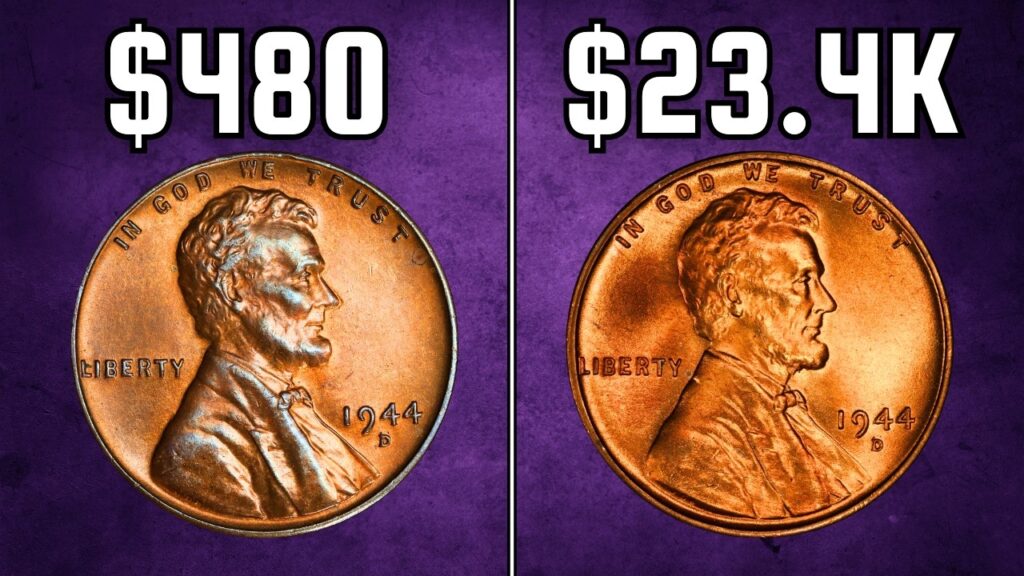
🧠 Step 7: 1944 Lincoln Cent (D Over S Error)
💰 MS64 → $480
- Graded MS64 by PCGS
- D over S mint mark
- Already valuable
💰 MS66 → $8,225
- Same coin
- Two grades higher
- Value jumps massively
👑 Step 8: The Big One — 1944 Lincoln Cent MS67
💰 Sold for $23,400
This is where everything comes together:
- Same 1944 date
- Same D over S mint mark
- One point higher than MS66
📈 That single grade increase resulted in:
👉 $8,225 → $23,400
That’s the power of condition + error + demand.
✅ Final Advice: What You Should Be Checking Right Now
If you search through your coins, focus on:
✔️ Mint marks
✔️ Repunched or overlapping letters
✔️ Older coins (1940s–1950s)
✔️ High condition examples
Use magnification and take your time — the details matter.
🏁 Final Thoughts
These aren’t myths or asking prices.
These are real coins, real errors, and real auction sales.
A tiny mistake at the U.S. Mint has already made collectors thousands of dollars — and more are still out there.
Leave a Reply